Wednesday, February 7, 2024

Today's Reading.


"Hail to the Lord's Anointed"
February 4, 2024

"Kings shall fall down before Him and gold and incense bring; All nations shall adore Him, His praise all people sing. To Him shall prayer unceasing and daily vows ascend; His kingdom still increasing, a kingdom without end.

"O'er ev'ry foe victorious, He on His throne shall rest, From age to age more glorious, all blessing and all-blest. The tide of time shall never His covenant remove, His name shall stand forever—that name to us is Love."

A little child may be shy about greeting visitors to the family home unless, of course, those visitors bring gifts of toys or treats. Shyness changes to an excited welcome as the child eagerly reaches for the gifts! The guests may express their hopes for the child's happiness and for a successful future career.

Was the Holy Child Jesus delighted to see and touch the rich gifts of gold, frankincense, and myrrh brought by distinguished visitors to Bethlehem? Did the wise men express hopes for His future happiness and success? The wise men were scholars who studied the stars and apparently knew the prophecy of a star and a king's scepter to arise in Israel (see Numbers 24:17). After a brief detour to Jerusalem, the wise men found the King of the Jews. Their visit was foretold by the prophet Isaiah: "Nations shall come to your light, and kings to the brightness of your rising ... they shall bring gold and frankincense" (Isaiah 60:3, 6b).

Would there be joy and success in the Child's future? After all, He was a King. But this King was crowned with thorns before He was crowned with glory. Jesus was lifted up on a cross before He ascended to take His throne. Future joy and exaltation followed only after He lived as "a Man of sorrows and acquainted with grief" (Isaiah 53:3b). In the eyes of the world, Jesus appeared to be a failure, suffering a shameful death nailed to a cross. His career path was spelled out in His Name—Jesus—which means "God saves," because He was born to "save His people from their sins" (Matthew 1:21b).

Through His death and resurrection, Jesus was "o'er ev'ry foe victorious." The King of the Jews worshiped by the wise men is the King of kings and the Lord of all nations. The King who once received glittering gifts of gold, frankincense, and myrrh now reigns "from age to age more glorious, all blessing and all-blest." His kingdom is "still increasing, a kingdom without end." Like the wise men, we worship the King whose Name expressed His future and ours, because He saved us from our sins. We will praise His Name forever, a Name that "to us is Love," a Name that is spelled J-E-S-U-S.

WE PRAY: Jesus, You love me and You saved me. You are my King. Amen.

This Daily Devotion was written by Dr. Carol Geisler. It is based on the hymn, "Hail to the Lord's Anointed," which is number 398 in the Lutheran Service Book.

Reflection Questions:

1. Do you enjoy the smell of incense? Why do you think it was considered a luxury in the ancient world?

2. Do the wise men's gifts say anything about what they thought of Jesus?

3. Can we bring gifts to Jesus today? What would you like to offer Him?

Tuesday, December 19, 2023


                                                                  Important Bulletin

https://europa.nasa.gov/message-in-a-bottle/sign-on/?utm_source=nasa&utm_medium=web&utm_campaign=nasa_homepage


<script async src="https://pagead2.googlesyndication.com/pagead/js/adsbygoogle.js?client=ca-pub-3544236766710636"
     crossorigin="anonymous"></script>

Friday, December 15, 2023


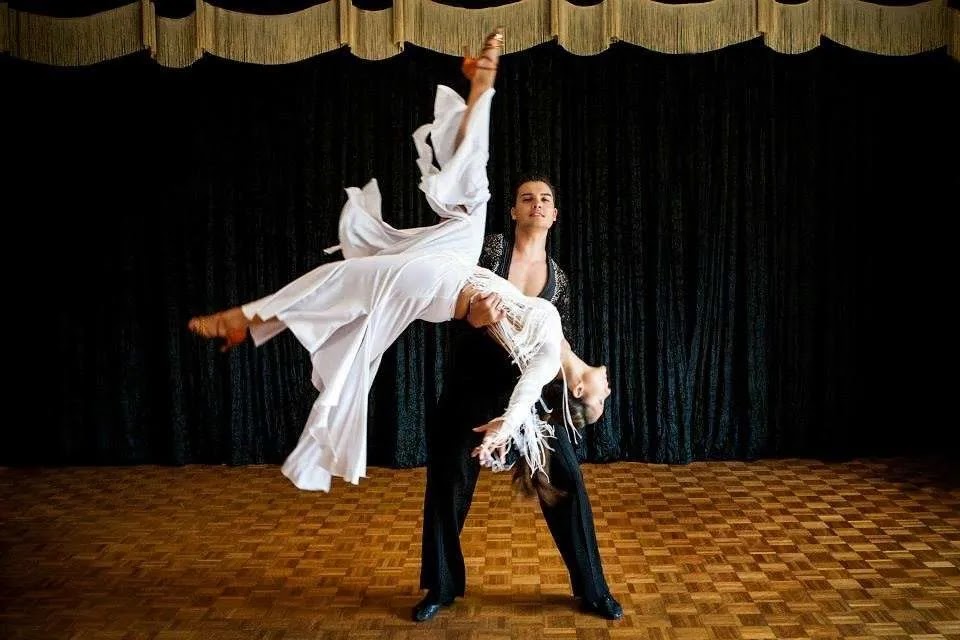
The Toll of Perfectionism: On the Physical and Mental Health of Ballet Dancers. New Dance Blog Post Featuring The fancy and bright Vintage website " Literary Hub"


✰✩✩✩


The very things that make dancers well-suited to ballet can be their undoing. Physically, it’s inborn advantages like high arches, shallow hip sockets, and hyperextended knees; mentally, dancers can be undone by the very psychological traits that make it possible for them to succeed in ballet. Chief among these is perfectionism, an entirely necessary trait in a hypercompetitive field that demands near-impossible feats of the human body.

It is impossible to talk about ballet’s mental illness problem without talking about perfectionism, about the inevitable mental and emotional toll of an art form that requires its practitioners to spend hours in front of mirrors, comparing their fallible bodies to an unattainable ideal, and to each other.

In 2003, researchers at Duke University surveyed students about the campus culture, particularly as it was experienced by young women. What they found was that Duke women felt enormous pressure to be socially active—party, drink, date, and hook up—while also getting high grades, participating in extracurriculars, and being beautiful. They were supposed to do all of this without seeming to try at all, without showing the strain, without breaking a sweat. Failure was unacceptable, but so was the appearance of trying to succeed. The researchers dubbed this set of absurd and gendered expectations “effortless perfection.” (Stanford University has its own version, “Stanford duck syndrome,” in which the goal is the appearance of smooth, effortless gliding that’s only made possible by frantic, unseen paddling.)

In the mid-2000s, I was a student at a similarly elite university, no longer working toward a career as a dancer but still rehearsing several days a week with a campus dance company. When I heard the term “effortless perfection,” I recognized the concept instantly. This, I remember thinking, is just ballet. This is what we were taught in dance: to be athlete-strong but artist-unruffled. To work just as hard at concealing the work as we did at the work itself. The goal, as Edward Villella wrote about Gelsey Kirkland, a dancer whose mental illness eclipsed her dancing, was “steel-like legs that are doing the most fantastical feats while the upper body is soft and lovely as though nothing was going on underneath.”

It’s no surprise that attempts to achieve the perfect ballet line can damage the body as dancers try to make their hips and spines and feet and toes do things they were never designed to do. The ideal dancer, in addition to having impossible flexibility and strength, is impossible in other ways, too, and the unending effort to achieve that which cannot be attained damages the mind and spirit.

The relationship between a dancer and her body is a deeply intimate one. Many dancers began taking classes out of a childhood need to improve their coordination, balance, and strength, and those who stick with it are rewarded with all three of those things, along with a deep knowledge of and connection to how their body works. They enjoy exceptional proprioception, awareness of the body’s position and its place in space. By the time she’s dancing professionally, a dancer knows every muscle and has control over each tendon’s tiniest movements.

MasJid Mosque.


AND

Children